Revisione annunci

Biliardo in PraticaSponsorizzato

Giochi a biliardo americano? Se le tue serate di allenamento finiscono in un’ora di tiri a caso, questo manuale è per te 🎱

Mostra meno

Il Manuale di allenamento di Biliardo in Pratica dà un metodo ai giocatori adulti che vogliono allenarsi con un piano, a casa, al bar o in una sala tranquilla.

Cosa trovi dentro
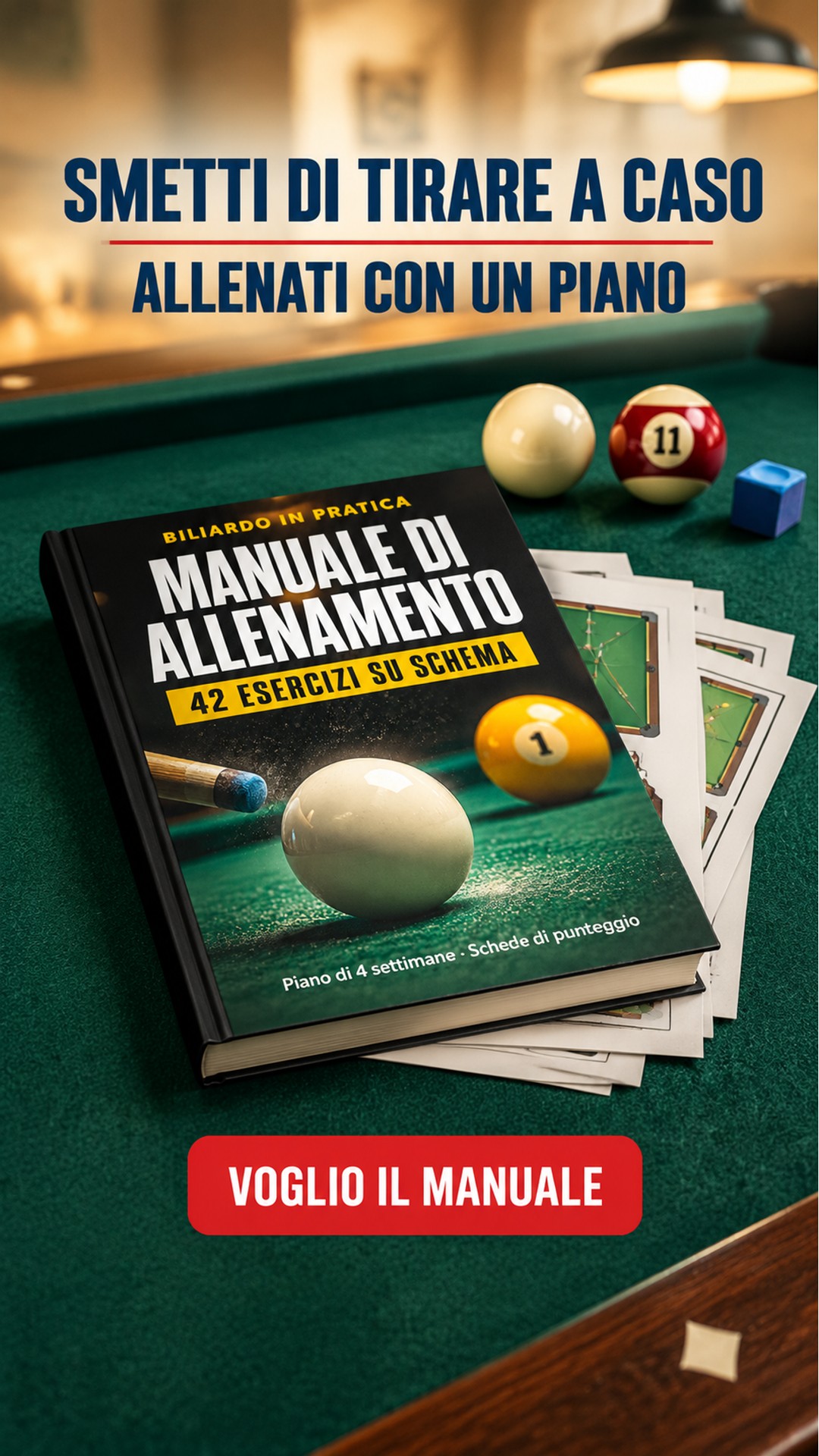
📐 42 esercizi, uno per pagina, con schema del tavolo visto dall’alto, diamanti e posizioni esatte delle biglie
🎯 Soglia e casella del punteggio per ogni esercizio, con una versione più facile e una più difficile
🗓️ Un piano di 4 settimane con 20 sessioni da circa 45 minuti
📝 Schede di punteggio, registri delle sessioni e una revisione settimanale

Si parte da posizione, ponte e steccata e si passa a mira, controllo della bianca, gioco di posizione, difesa e abitudini di spaccata.

Apri il manuale sulla sponda, disponi le biglie con gli anelli di carta e comincia a tirare. I tuoi punteggi ti dicono su cosa lavorare la prossima volta.

19 €, pagamento unico. Segui gli esercizi direttamente al tavolo.

👉 Tocca Acquista ora e prendi il tuo Manuale di allenamento di Biliardo in Pratica.

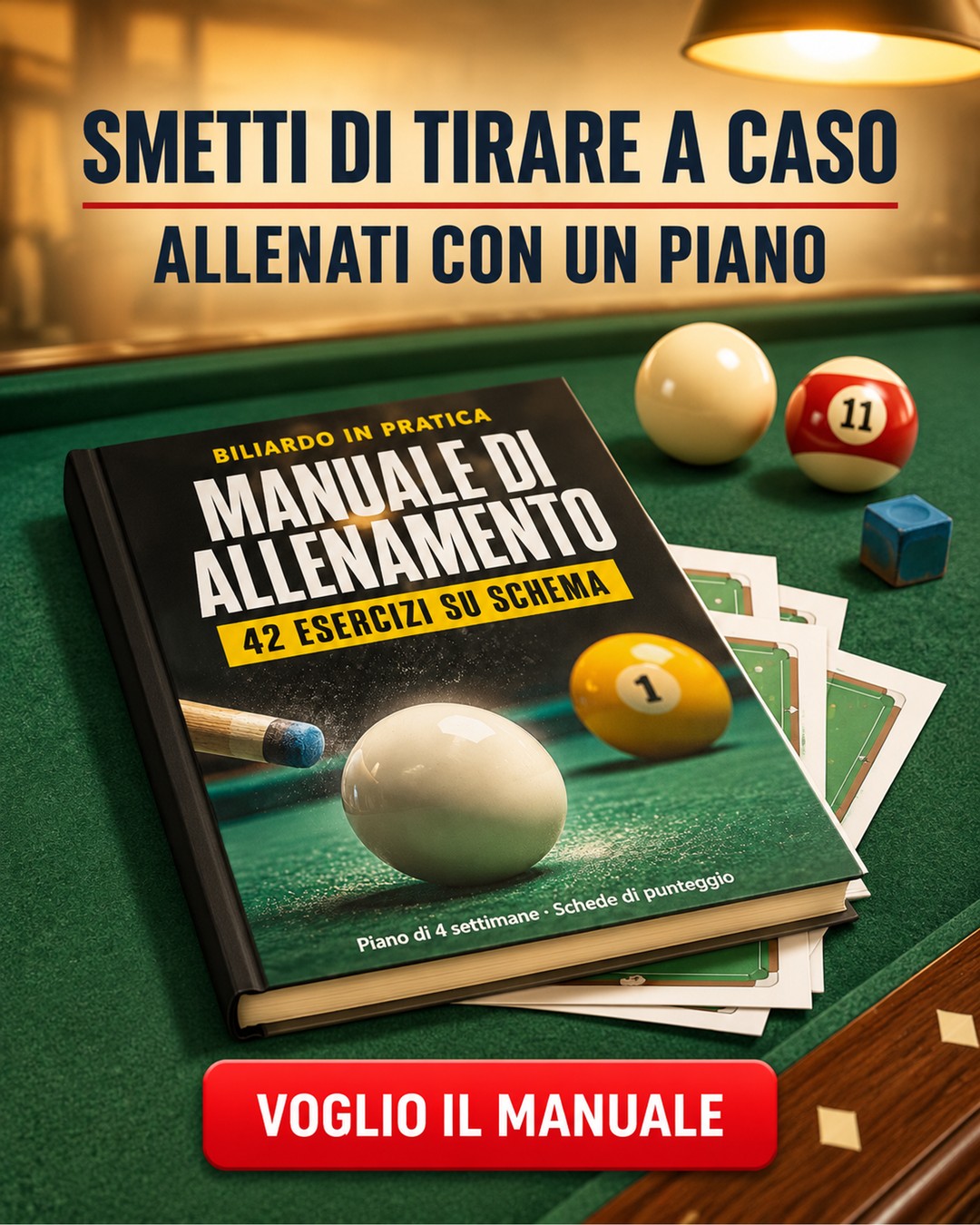
Creatività in preparazione Manuale sul panno verde, schede a ventaglio, titolo e pulsante rosso

Manuale di allenamento con 42 esercizi

Esercizi al tavolo, piano di 4 settimane e schede di punteggio

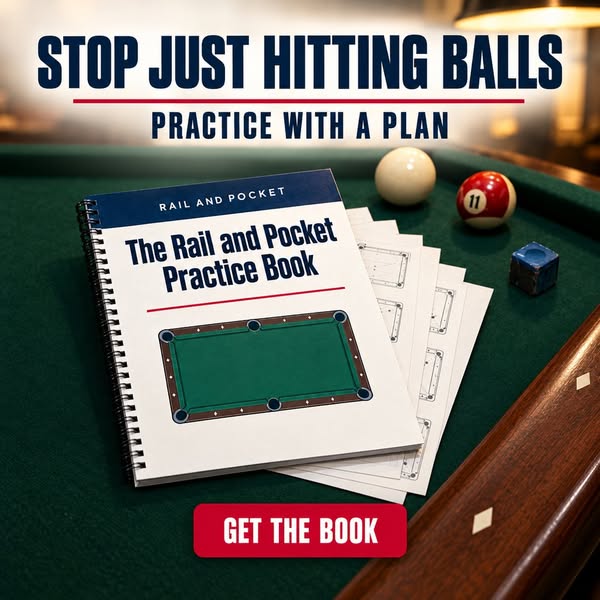
Originale Rail And Pocket R1 · 1604093698123706 Creatività originale Rail And Pocket, R1

Pool players: if your practice nights turn into an hour of random shots, this was made for you 🎱

The Rail and Pocket Practice Book is a printable practice system for adult players who want structure at the table, at home, in a bar or in a quiet pool hall.

Inside:
📐 42 drills, each on its own page with a top-view table diagram, diamonds and exact ball positions
🎯 A pass mark and a score box on every drill, plus an easier and a harder version
🗓️ A 4-week plan with 20 sessions of about 45 minutes
📝 Score sheets, session logs and a weekly review

The path goes from stance, bridge and stroke to aim, cue ball control, position play, safeties and break habits.

Print it, put it on the rail, set up the balls with paper rings and start shooting. Your own numbers show you what to work on next.

$37, one-time. Instant PDF download.

👉 Tap Shop Now and get your Rail and Pocket Practice Book.

The Pool Practice Book: 42 Drills

Printable drills, a 4-week plan and score sheets

Comprar

Biliardo in PraticaSponsorizzato

L’orologio sopra il bancone diceva che ti restavano 26 minuti al tavolo e avevi passato la prima mezz’ora a rincorrere biglie come in una partita al bar il sabato sera.

Mostra meno

Un po’ rode, quando paghi a ore.

Di solito va così.

A casa non hai un tavolo. Giochi in sala, in un bar con un paio di tavoli da pool più piccoli o in un circolo dove ti segni su un foglio. Prendi un tavolo, sistemi le biglie nel triangolo e il tempo comincia a scorrere.

Spacchi. Imbuchi tre biglie di fila, sbagli e continui a tirare su quelle rimaste. Rimetti le biglie nel triangolo. Stessa storia. Magari provi a rifare un tiro al taglio che hai sbagliato la settimana scorsa, ma non ricordi esattamente dov’era la bianca e vai a occhio.

Quando finisce l’ora hai tirato un sacco di biglie. Ti sei allenato a ben poco.

A pensarci, è strano.

Se affitti un campo, arrivi sapendo cosa fare. Se prenoti un orario per giocare a golf, probabilmente ti riscaldi con un obiettivo. Anche in palestra, quasi tutti entrano sapendo se quel giorno tocca alle gambe.

Eppure al tavolo, dove paghi ogni minuto, spesso finisci per improvvisare tutto.

Il conto è semplice. Se giochi due ore a settimana in sala, sono più di cento ore all’anno di tavolo pagato. Se anche solo metà passa a tirare a caso, sono un bel po’ di tempo e soldi spesi per un gioco che resta sempre uguale.

Puoi sfruttare meglio le ore che hai già, se sai cosa farci. Aggiungerne altre non serve.

Così cerchi qualcosa di meglio.

Trovi video che dovresti riguardare in sala, con il telefono appoggiato al triangolo. Trovi elenchi di esercizi che saltano la disposizione delle biglie. Trovi articoli lunghi, ottimi in treno e inutili col tempo che scorre.

Quello che vuoi è semplice. Entri, apri una pagina, disponi le biglie, tiri, segni il punteggio e passi alla pagina dopo. Sai già cosa fare. Puoi pensare solo al tiro.

Il Manuale di allenamento di Biliardo in Pratica funziona proprio così.

È un manuale di 42 esercizi di pool da usare al tavolo. Ogni esercizio ha la sua pagina con uno schema chiaro del tavolo visto dall’alto, in proporzione 2 a 1, con i diamanti sulle sponde e tutte e sei le buche. Le biglie sono disegnate nei punti in cui vanno messe e le posizioni sono indicate con coordinate in diamanti.

In sala è un dettaglio che conta, perché i tavoli non sono tutti della stessa misura. Un tavolo da bar compatto e uno da 9 piedi hanno lunghezze diverse, ma entrambi hanno i diamanti. Disponi le biglie seguendo i diamanti e l’esercizio funziona su tutti e due.

Ogni pagina ha i passaggi, una soglia, una casella per il punteggio e una versione più facile e una più difficile per quando il tavolo, il panno o la serata non aiutano.

Ci sono anche modelli di sessione da 30, 45 e 60 minuti.

È qui che cambia il modo di usare il tempo che paghi al tavolo. Scegli un modello prima di entrare, magari quello da 45 minuti se hai poco tempo, e conosci già l’ordine. Prima controlli la steccata, poi lavori sulla mira, sul controllo della bianca, sulla posizione o sulla difesa, e chiudi con una partita breve.

C’è anche un piano di 4 settimane con 20 sessioni da circa 45 minuti l’una. Se vai in sala due o tre volte a settimana, il piano ti dice già cosa fare ogni volta.

La tua prossima serata in sala potrebbe andare così.

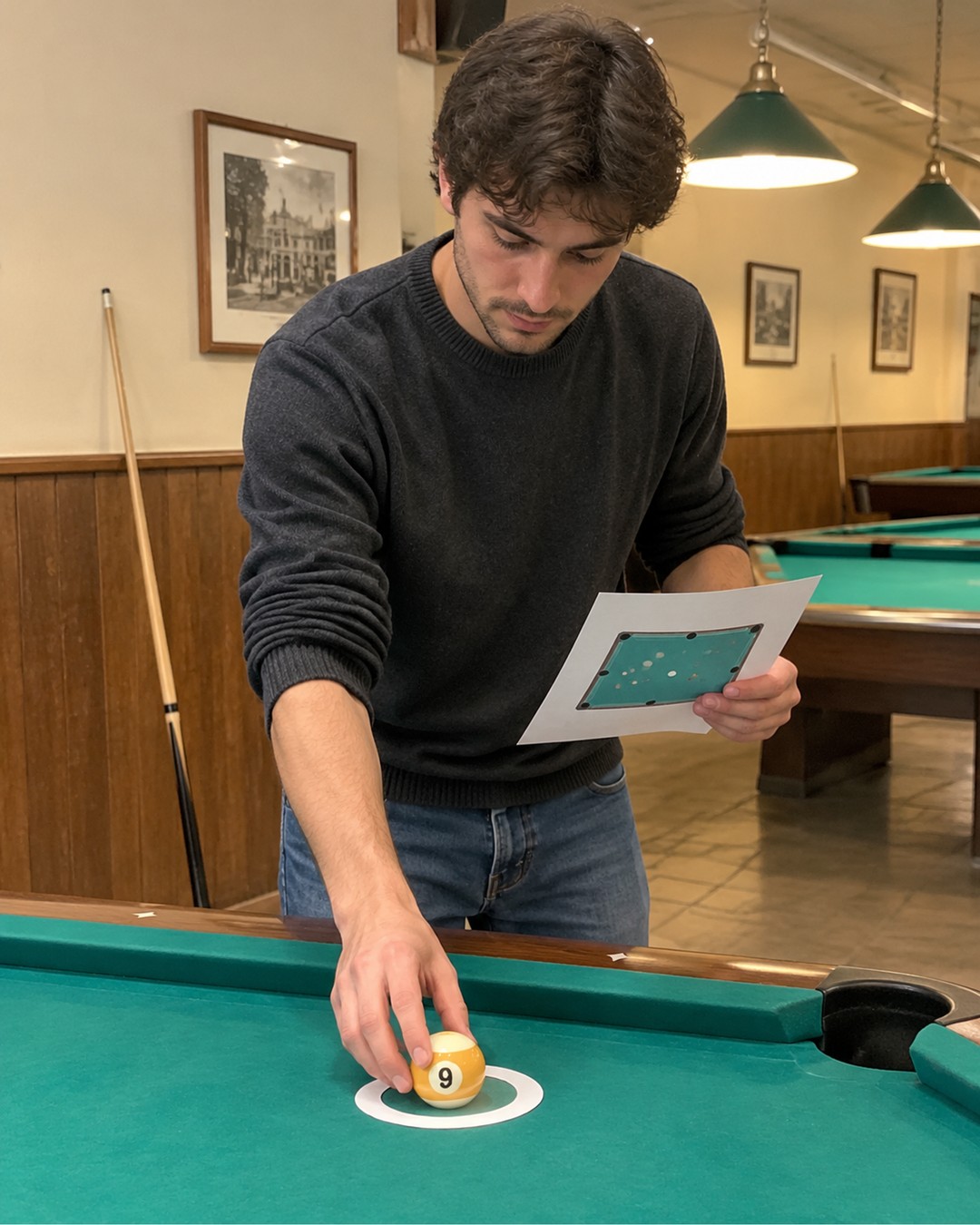
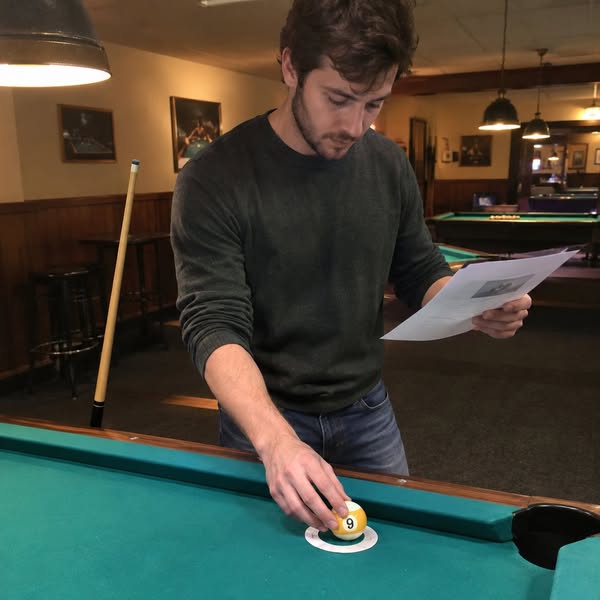
Scegli tre pagine di esercizi e il registro della sessione, li pieghi e li metti nella custodia della stecca. Porti anche qualche anello di carta per segnare dove vanno le biglie, di quelli adesivi che costano poco e servono a rinforzare i fori dei fogli. Si staccano dal panno senza lasciare segni.

Prendi il tavolo. Appoggi sulla sponda il modello da 45 minuti.

Cinque minuti per la steccata, con la bianca che va dritta su e giù per il tavolo. Dieci minuti su un esercizio di imbucata, ripetendo il tiro dallo stesso punto e contando le biglie imbucate. Quindici minuti sul controllo della bianca, cercando di arrivare a un anello di carta con un colpo fermo, a seguire o a rientrare. Dieci minuti su un esercizio di posizione. Cinque minuti per segnare com’è andata.

L’orologio dice che ti resta ancora tempo. Per una volta fai le cose con calma, perché sai già cosa viene dopo.

Poi arriva il momento in cui capisci. A fine sessione guardi il registro e vedi tre numeri che puoi migliorare la prossima volta. Hai numeri precisi, oltre alle sensazioni. La prossima volta li puoi verificare da te, nelle stesse caselle.

È un modo concreto per capire se l’allenamento sta funzionando.

Quanto costa?

Il Manuale di allenamento di Biliardo in Pratica costa 19 €, pagamento unico. Scegli le pagine che ti servono per allenarti e le tieni a portata di mano sulla sponda. Stanno nella custodia della stecca.

Confrontalo con qualche volta che paghi il tavolo. Se ti aiuta a fare buon uso di quelle ore, il prezzo si ripaga già nel modo in cui le passi, senza che nessuno ti prometta un trofeo.

C’è anche dell’altro.

La sala è uno dei pochi posti dove puoi concentrarti su una cosa alla volta. La posta di lavoro e le notifiche restano fuori. Senti solo le biglie che si toccano e il suono di un’imbucata pulita.

Con un piano ti godi ancora di più quel tempo. Esci sapendo su cosa hai lavorato, cos’è andato bene e cosa vuoi provare la settimana dopo.

Continui a giocare. In più ti alleni, e finalmente le due cose cominciano ad avere un senso insieme.

Il tempo al tavolo l’hai già pagato. Tanto vale usare ogni minuto.

Se vuoi vedere i 42 esercizi, i modelli di sessione e il piano di 4 settimane, tocca Scopri di più.

Creatività in preparazione Giocatore in sala che posa la biglia 9 sull’anello di carta con la scheda in mano

Sfrutta il tempo al tavolo che paghi

Modelli di sessione ed esercizi da preparare con i diamanti

Originale Rail And Pocket R2 · 1084767791133254 Creatività originale Rail And Pocket, R2

The clock above the counter said you had 26 minutes of table time left, and you had spent the first half hour chasing balls around like it was a Saturday night bar game.

That stings a little when you are paying by the hour.

Here's how it usually goes.

You don't have a table at home. Your pool happens at a hall, a bar with a couple of bar boxes, or a rec center with a sign-up sheet. You get a table, you rack, and the time starts.

You break. You run three balls, miss, and keep shooting whatever is left. You rack again. Same thing. Maybe you set up a cut shot you missed last week, but you don't remember exactly where the cue ball was, so you guess.

By the time the hour is up you have hit a lot of balls. You have not practiced much of anything.

When you think about it, that's strange.

If you rent a court, you show up with a plan. If you book a tee time, you probably warm up with purpose. Even at the gym, most people walk in knowing whether it's leg day.

But table time, which you are paying for by the minute, often gets spent on pure improvisation.

The math is simple. If you play two hours a week at a hall, that's more than a hundred hours a year of paid table time. If even half of it is random shooting, that's a lot of time and money going into a game that never really changes.

The fix isn't more hours. It's knowing what to do with the ones you already have.

So you look for something better.

You find videos you would need to rewatch in the hall, phone propped against the rack. You find drill lists that skip the setup. You find long articles that are great for the train and useless when the clock is running.

What you want is simple. Walk in, open to a page, set the balls, shoot, score, next page. No thinking about what to do. All your thinking goes into the shot.

That's exactly how The Rail and Pocket Practice Book works.

It's a printable book of 42 pool drills. Every drill has its own page with a clean top-view diagram of a 2 to 1 table, diamonds on the rails and all six pockets. The balls are drawn where they go, and the positions are given in diamond coordinates.

That detail matters at a hall, because the tables aren't always the same size. A bar box and a nine footer have different lengths, but they both have diamonds. Set the balls by the diamonds and the drill works on either one.

Each page has steps, a pass mark, a score box, and an easier and harder version for when the table, the cloth or your night isn't cooperating.

And it comes with session templates for 30, 45 and 60 minutes.

That's the part that changes paid table time. You pick a template before you walk in, maybe the 45 minute one on a short night, and you already know the order: a stroke check, then aim, then cue ball control, then a position or safety drill, then a short game to finish.

There's also a 4-week plan with 20 sessions of about 45 minutes each, so if you go twice or three times a week, the plan already tells you what to do on each visit.

Here's what your next hall night could look like.

You print three drill pages and a session log and fold them into your case. You also bring a few paper reinforcement rings, the cheap sticky circles from the office aisle, to mark ball spots. They come right off the cloth and leave no mark.

You get the table. You set the 45 minute template on the rail.

Five minutes of stroke work, cue ball straight up and down the table. Ten minutes on a pocketing drill, shots at the same spot, counting makes. Fifteen minutes on a cue ball control drill, trying to stop, follow or draw to a ring. Ten minutes on a position drill. Five minutes to log it.

The clock says you still have time. For once you're not rushing, because you know what's next.

And here's the moment that makes it click. At the end of the session you look at the log and see three numbers you can beat next time. Not a feeling. Numbers. You can check them yourself, next visit, in the same boxes.

That's the honest way to know whether practice is working.

Now the value.

The Rail and Pocket Practice Book is $37, one time. You download the PDF right away and print what you need for your own practice. It fits in a cue case.

Compare that with a few visits of table time. If it helps you use those hours on purpose, it pays for itself in how those hours feel, without anyone promising you a trophy.

And there's something bigger here.

The hall is one of the few places where you get to focus on one thing at a time. No notifications, no work email, just the click of the balls and the sound of a clean pocket.

A plan makes that time even better. You walk out knowing what you worked on, what went well, and what you want to try next week.

You still get to play. You just also get to practice, and the two finally start to feel connected.

The table time is already paid for. You might as well use every minute of it.

If you'd like to see the 42 drills, the session templates and the 4-week plan, tap Learn More.

Make paid table time count

Session templates and drills set by the diamonds

Más información
Biliardo in PraticaSponsorizzato

La biglia che eri sicuro di mandare in buca è rimbalzata sulla sponda lunga esattamente un diamante prima del punto a cui miravi. Per una volta hai capito perché.

Mostra meno

Era una questione di velocità. La fortuna non c’entrava. Il manuale sulla sponda te l’aveva detto due righe prima.

È una piccola cosa. Ma se giochi a pool da un po’, sai quanto è raro capire perché hai sbagliato un tiro.

Di solito la scena è questa.

Giochi da anni, magari dai tempi dell’università o da quando un amico aveva un tavolo in garage. Sai imbucare qualche biglia di fila. In una partita tra amici te la cavi. Ma ogni tanto ti blocchi.

Ti mettono in difficoltà sempre gli stessi tiri. Dopo un tiro dritto da lontano, la bianca va troppo avanti. Quando giochi in difesa, lasci il tiro all’avversario. Un gioco di posizione semplice si complica perché la bianca è scappata di mezzo diamante.

E quando cerchi di lavorarci, non sai da dove cominciare.

A pensarci, è strano. Puoi trovare la coppia di serraggio esatta di un bullone della tua auto. Puoi trovare una guida passo passo per quasi ogni riparazione di casa.

Eppure nel gioco che pratichi da vent’anni vai ancora a sensazione, a memoria e con un paio di dritte che una volta ti hanno dato al bar.

Facciamo due conti. Se hai giocato due sere a settimana per dieci anni, hai passato al tavolo ben più di mille sere. Se perlopiù erano partite improvvisate, senza aver segnato il risultato di un solo esercizio, hai passato un bel po’ di tempo a ripetere le stesse abitudini, buone e cattive.

L’esperienza e l’allenamento sono due cose diverse. Lo sai già.

Così inizi a cercare.

Trovi ore di video, alcuni davvero ottimi. Ma li trovi senza un ordine. Una sera è un tiro in salto, la sera dopo una partita a cutthroat, e da tutto questo non viene fuori un piano.

Trovi libri pieni di teoria. Li leggi, sei d’accordo, poi non applichi mai niente perché non ti dicono dove mettere le biglie domani.

Sui forum trovi nomi di esercizi e, sotto, discussioni su chi li ha inventati.

Quello che cerchi è semplice e non lo trovi. Una serie di esercizi in un ordine chiaro, da preparare sempre allo stesso modo, con un modo per misurare come vanno.

È quello che trovi nel Manuale di allenamento di Biliardo in Pratica.

È un manuale da usare al tavolo con 42 esercizi in sei parti. Posizione, ponte e steccata, mira e imbucata, controllo della bianca, posizione e sequenze, tiri di sicurezza e difesa, spaccata e abitudini da partita.

Ogni esercizio ha la sua pagina con lo schema del tavolo visto dall’alto in proporzione reale di 2 a 1, i diamanti su tutte le sponde, sei buche e le biglie disegnate esattamente dove vanno messe. Il manuale indica ogni posizione con coordinate in diamanti, così puoi preparare lo stesso esercizio su un tavolo da bar compatto o su uno da 9 piedi.

Ogni pagina ha i passaggi, una soglia, una casella per il punteggio e una versione più facile e una più difficile. Accanto allo schema trovi spiegazioni semplici su dove deve finire la bianca, cosa di solito va storto e cosa correggere.

Per chi gioca da anni, è proprio questa struttura che conta. Come si tiene una stecca lo sai già. Ti serve capire quale abitudine ti sta davvero costando dei tiri e vedere un numero che te lo dimostri.

Il manuale parte dalla mappa del tavolo con diamanti, spot, linea di testa, linea lunga e una legenda semplice. Così leggi tutti gli schemi allo stesso modo e puoi disegnare i tuoi esercizi sulle tavole vuote in fondo.

Una prima sessione potrebbe andare così.

Salti le prime parti, perché puoi farlo. Apri la parte sul controllo della bianca e vai alla scala del colpo fermo. La bianca e la biglia bersaglio sono sulla stessa linea. Parti da vicino e ti allontani un diamante alla volta.

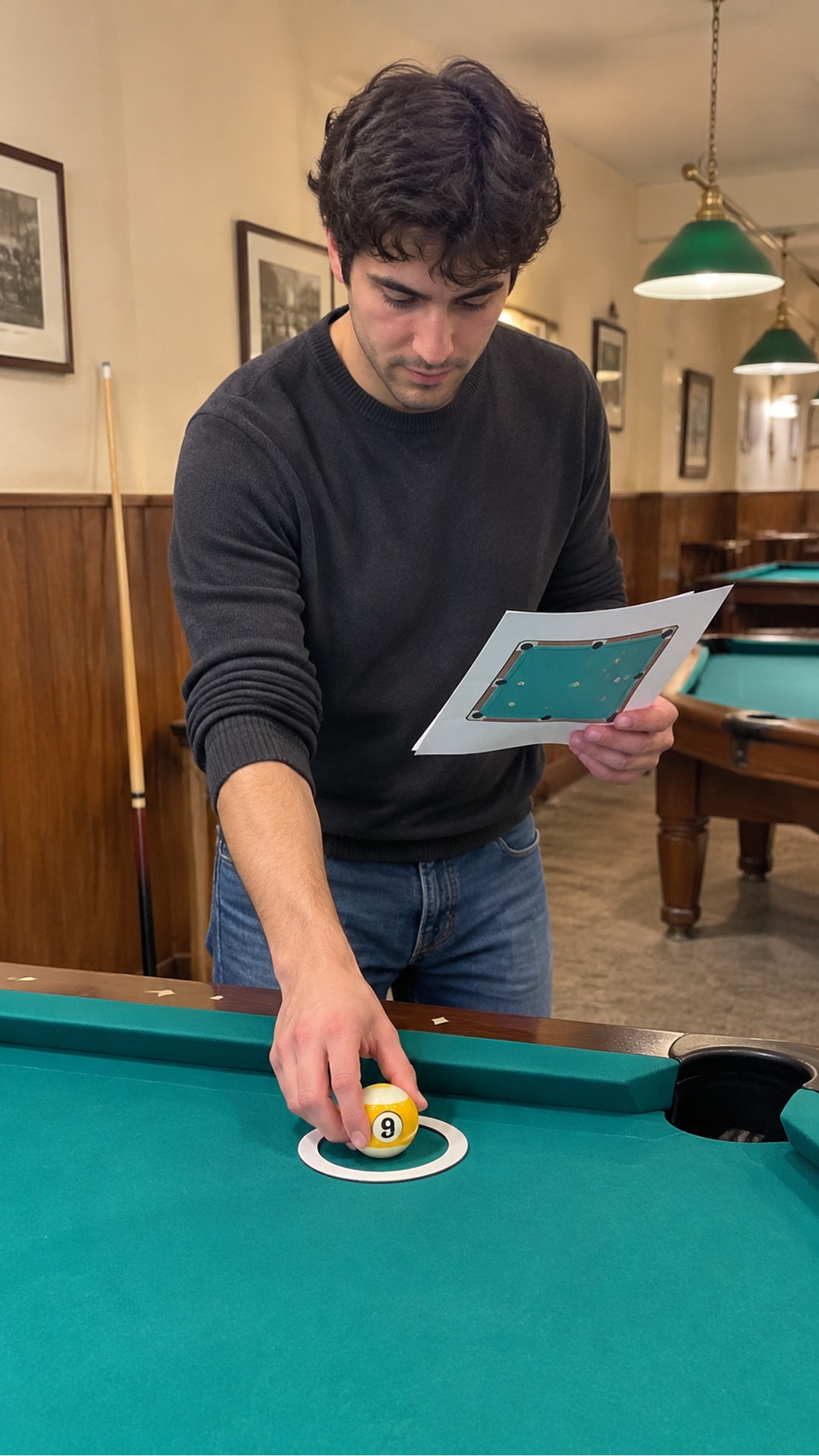
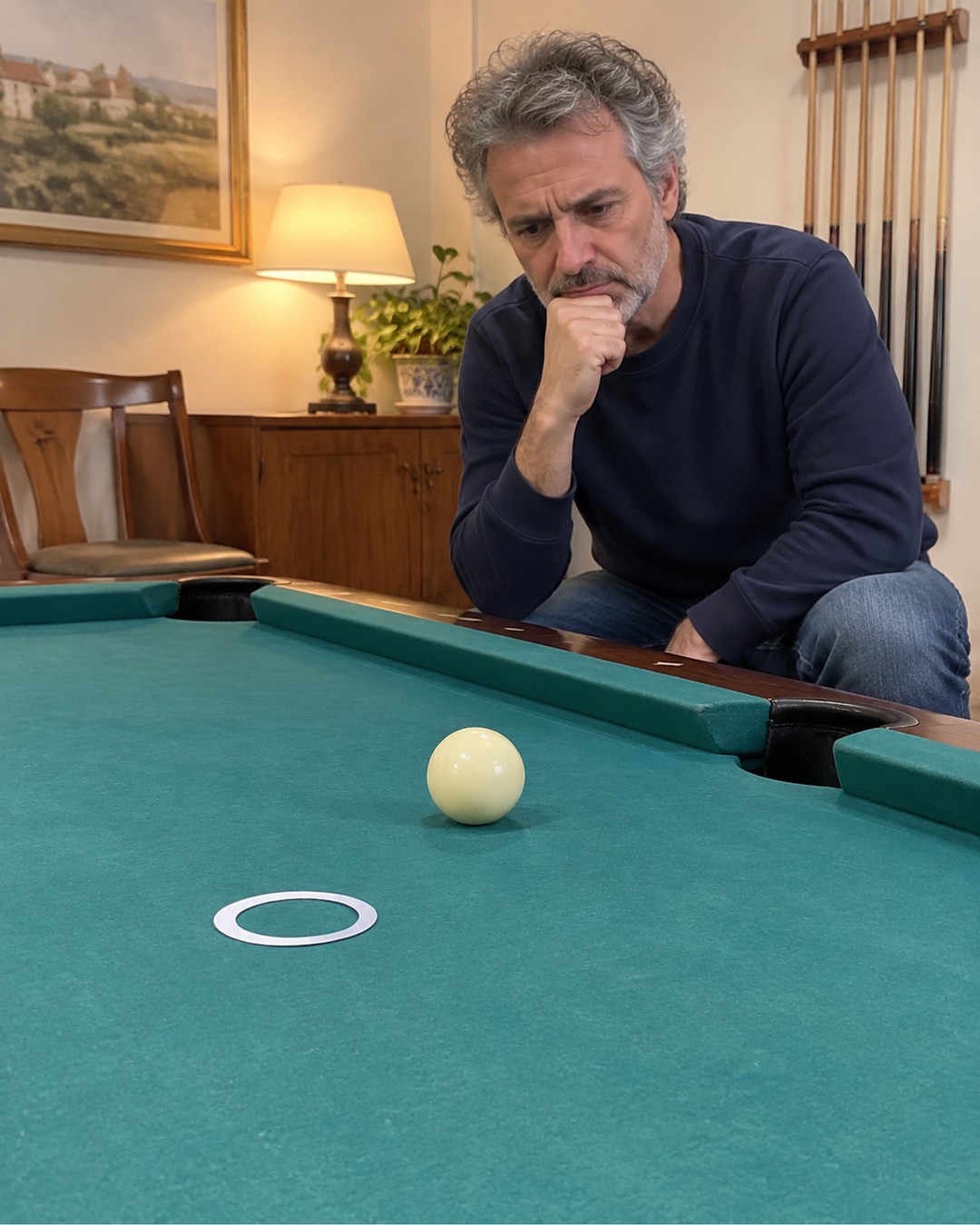
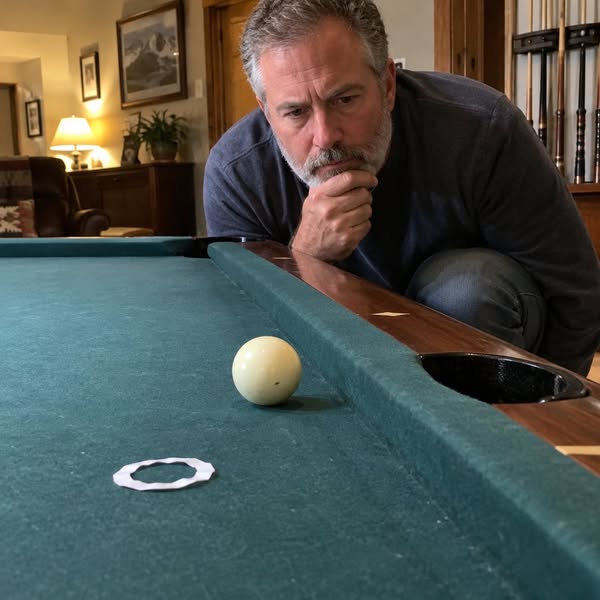
Disponi le biglie seguendo le coordinate. Sul panno metti un anello di carta adesivo dove deve fermarsi la bianca.

Dieci tiri a ogni distanza. Scrivi il numero nella casella.

Da vicino ti riescono tutti. Da più lontano la bianca continua ad andare avanti di qualche centimetro. Ora sai che è la steccata da lontano a farti sbagliare. La mira c’era.

Poi passi alla posizione e a quel rimbalzo sulla sponda lunga, un diamante prima del punto che volevi. La nota accanto allo schema spiega che una biglia, quando va più piano, esce dalla sponda con un angolo diverso rispetto a quando va più veloce. Riprovi a un’altra velocità. La biglia si ferma sull’anello.

È lì che puoi verificare com’è andata. Hai il conteggio scritto di tuo pugno e un motivo per quel tiro sbagliato che puoi mettere alla prova domani. Nessuno deve prometterti niente.

Il manuale include anche un piano di 4 settimane con 20 sessioni da circa 45 minuti, se preferisci che l’ordine lo scelga qualcun altro, e una lista delle abilità per vedere quali parti hai già fatto.

Quanto costa?

Il Manuale di allenamento di Biliardo in Pratica costa 19 €, pagamento unico. Apri le pagine che ti servono per allenarti a casa.

Costa meno di parecchie cose che hai già nella custodia. E dà una struttura alle ore che passeresti comunque al tavolo.

Il prezzo è secondario.

Conta finalmente capire il tuo gioco. Gli anni passati a giocare a sensazione hanno valore. Con un bersaglio, un conteggio e un motivo, quelle sensazioni ti servono ancora di più.

L’esperienza ce l’hai già. Qui trovi una mappa per orientarti.

Se vuoi vedere i 42 esercizi, la mappa del tavolo e le schede di punteggio, tocca Scopri di più.

Creatività in preparazione Giocatore appoggiato alla sponda che osserva la bianca e l’anello sul panno

Anni di pool, zero esercizi misurati?

42 esercizi con punteggio, dalla steccata alla difesa

Originale Rail And Pocket R3 · 966826719257134 Creatività originale Rail And Pocket, R3

The ball you were sure you had made bounced off the long rail exactly one diamond short of where you aimed, and for once you knew why.

It wasn't luck. It was the speed. And the book on the rail had warned you about it two lines earlier.

That's a small thing. But if you have played pool for a while, you know how rare it is to understand a miss.

Here's the usual picture.

You have played for years, maybe since college, maybe since a friend had a table in the garage. You can run a few balls. You can hold your own in a friendly game. But every so often you hit a wall.

The same shots keep beating you. The cue ball goes too far after the long straight-in. Your safeties leave the shot. A simple position play turns into a hard one because the cue ball drifted half a diamond.

And when you try to work on it, you don't know where to start.

It's strange, when you think about it. You can look up the exact torque spec for a bolt on your car. You can find a step-by-step for almost any repair in your house.

But the game you have played for twenty years still lives on feel, memory and a few things someone told you at a bar once.

Here's some simple math. If you have played two nights a week for ten years, that's well over a thousand nights. If most of them were pick-up games without a single tracked drill, that's a lot of time spent repeating the same habits, good and bad.

Experience isn't the same as practice. You know that already.

So you start looking.

You find hours of video, and some of it is genuinely brilliant. But there's no order to it. One night it's a jump shot, the next it's a cut-throat rack, and none of it adds up to a plan.

You find books full of theory that you read and agree with and then never apply, because they don't tell you where to put the balls tomorrow.

You find drill names on forums with arguments underneath about who invented them.

What you don't find is something simple: a set of drills in a clear order, set up the same way every time, with a way to measure them.

That's The Rail and Pocket Practice Book.

It's a printable book with 42 drills across six skill parts: stance, bridge and stroke; aim and pocketing; cue ball control; position and patterns; safeties and defense; and break and match habits.

Every drill sits on its own page with a top-view diagram of a table drawn to a true 2 to 1 proportion, diamonds on all rails, six pockets, and the balls drawn exactly where they go. The book gives every position in diamond coordinates, so you can set up the same drill on a bar box or a nine footer.

Each page has the steps, a pass mark, a score box, and an easier and a harder version. Plain explanations sit right next to the diagram: where the cue ball should end up, what usually goes wrong, and what to change.

For an experienced player, that structure is the whole point. You don't need to be told how to hold a cue. You need to find out which of your habits is actually costing you, and you need a number that shows it.

The book starts with a table map: the diamonds, the spots, the head string and the long string, and a simple notation legend. That way every diagram reads the same, and you can sketch your own drills on the blank table sheets in the back.

Here is how a first session might go.

You skip ahead, because you can. You go to the cue ball control part and open a stop shot ladder: the cue ball and object ball on a straight line, starting close and moving back one diamond at a time.

You set the balls using the coordinates. You stick a paper reinforcement ring on the cloth where the cue ball should stop.

Ten shots at each distance. You write the count in the box.

At the short distances you're perfect. At the longer ones the cue ball keeps rolling forward a few inches. Now you know. It's not your aim. It's the stroke at distance.

Then the position part, and that bounce off the long rail one diamond short. The note beside the diagram says that at softer speeds a ball comes off a rail at a different angle than at firmer ones. You try it again at a different speed. It lands on the ring.

That's the proof moment. No promises, just your own count in your own handwriting, and a reason for the miss you can test again tomorrow.

The book also includes a 4-week plan with 20 sessions of about 45 minutes, if you want someone else to choose the order, and a skills checklist so you can see which parts you have covered.

Now the value.

The Rail and Pocket Practice Book is $37, one time. You download the PDF right away and print it at home for your own practice.

That's less than plenty of things already in your case. And it gives shape to the hours you are going to spend at the table anyway.

But the real point isn't the price.

It's finally getting to understand your own game. Years of feel are valuable. Feel plus a target, a count and a reason is even better.

You already have the experience. This just gives it a map.

If you'd like to see the 42 drills, the table map and the score sheets, tap Learn More.

Years of pool, zero tracked drills?

42 measured drills from stroke to safeties

Más información

Biliardo in PraticaSponsorizzato

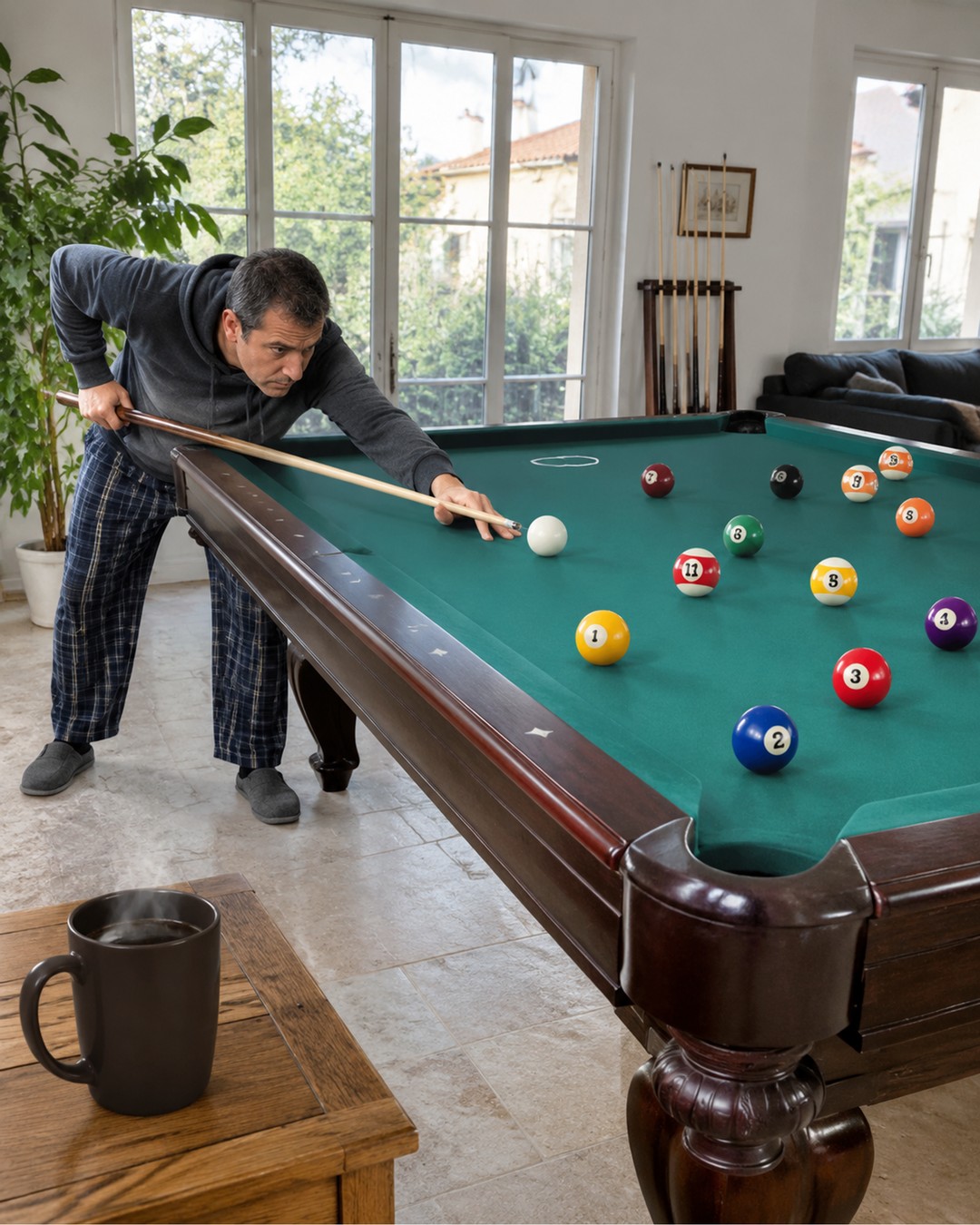
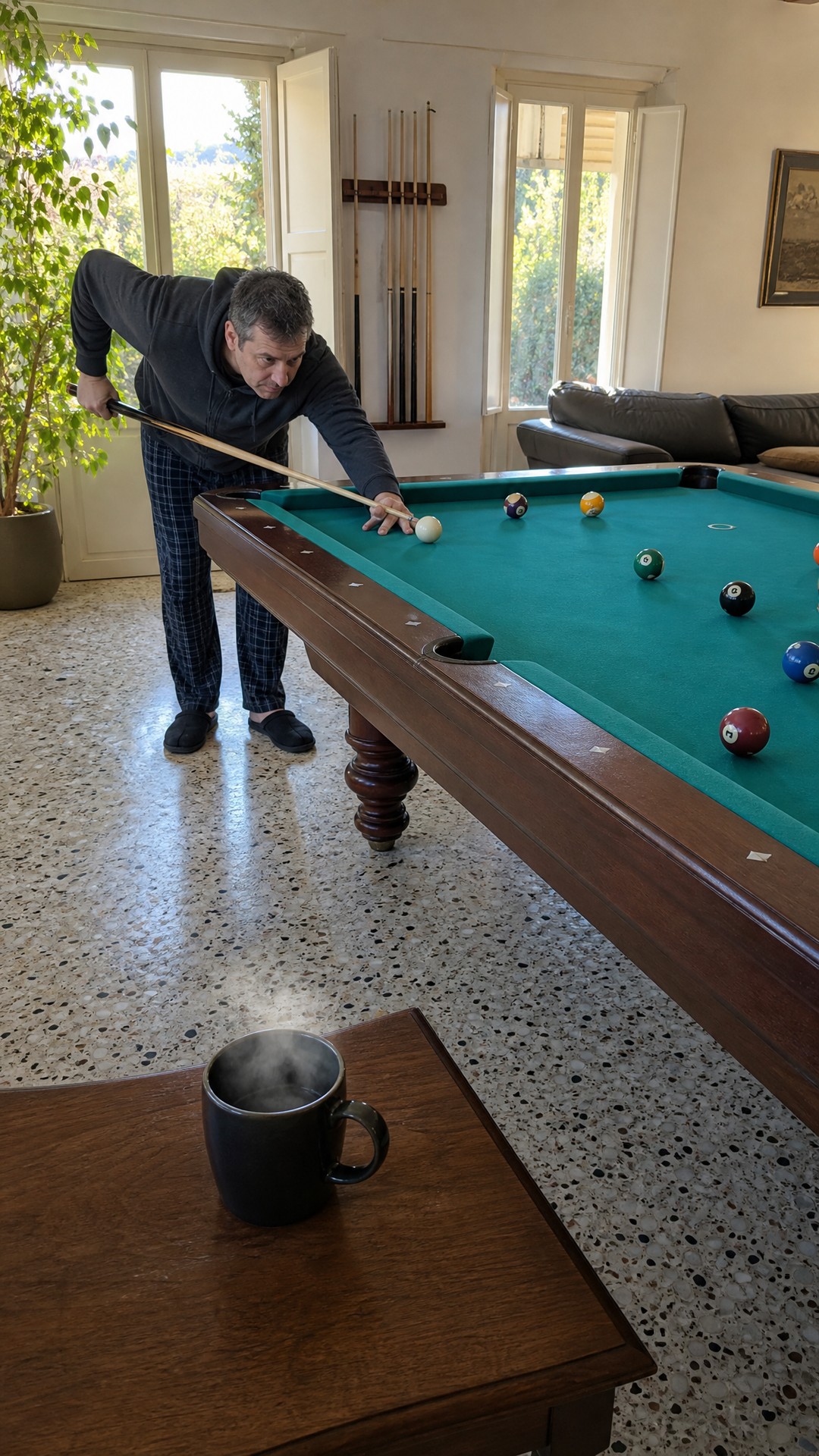
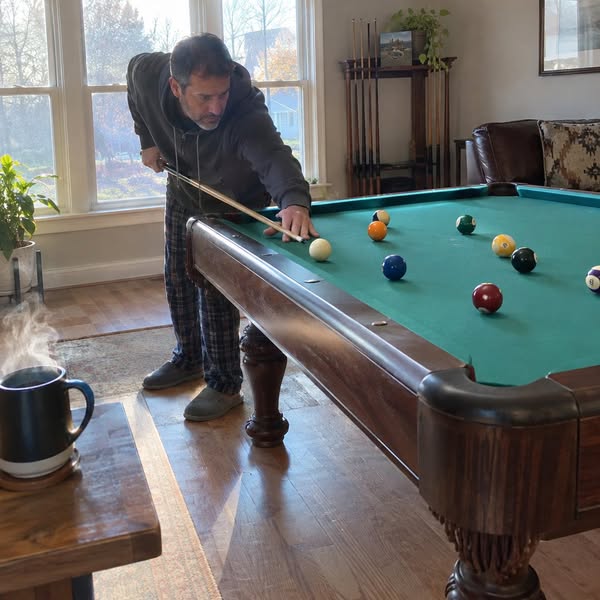
È sabato mattina, il caffè è ancora troppo caldo da bere e in casa c’è così silenzio che senti la bianca percorrere tutto il tavolo e sfiorare la sponda.

Mostra meno

Non ti sei mai allenato alle 8 del mattino. Eppure potrebbe essere il momento migliore della settimana per giocare a pool.

È una sorpresa, se ci pensi.

Per la maggior parte delle persone, il pool è una cosa da fare la sera. Dopo il lavoro, dopo cena, dopo la partita in TV. A quel punto sei stanco, un po’ distratto, e finisci per fare qualche partita senza un’idea precisa.

Nel fine settimana non va meglio. Il tavolo diventa il posto dove appoggi le borse della spesa. Arrivano gli amici e diventa un gioco da fare in compagnia. Ti diverti, ma di allenamento ne fai poco.

Intanto il tavolo è lì. Ardesia, panno, sponde, lampada. Ogni giorno hai tutto quello che ti serve per migliorare.

Probabilmente hai già notato la stessa cosa in altri momenti della tua vita.

Le cose a cui dai un orario le fai. La corsa fissata alle 6 del mattino la fai. Quella che pensi di infilare da qualche parte salta.

Col pool succede lo stesso. Se ti alleni solo quando ti viene voglia, il più delle volte non ti alleni.

E a fare i conti è ancora più evidente. Se fai mezz’ora tre volte a settimana per un anno, sono circa settantotto ore. Mica poco. Il tempo per allenarti c’è. La domanda è se il tempo che ci passi già ti lascia qualcosa.

Di solito si cerca di rimediare andando a caccia di esercizi.

Salvi video che non riguardi mai. Fai screenshot di schemi sui social tagliati, sfocati o senza la bianca. Compri un libro sul biliardo che resta sullo scaffale accanto al telecomando.

Niente di tutto questo si adatta al momento che hai davvero a disposizione. Trenta minuti tranquilli, una tazza di caffè e un tavolo.

Una pagina, invece, ci sta. Una pagina, un esercizio da preparare e un punteggio da segnare.

È quello che trovi nel Manuale di allenamento di Biliardo in Pratica.

È un manuale da usare al tavolo con 42 esercizi. Ognuno ha la sua pagina, con lo schema del tavolo visto dall’alto in proporzione 2 a 1, i diamanti sulle sponde, tutte e sei le buche e le biglie disegnate dove vanno messe. Il manuale indica le posizioni con coordinate in diamanti, così fai presto a preparare l’esercizio e puoi ripeterlo facilmente.

Ogni pagina ti dice cosa fare, quante volte farlo, qual è la soglia da superare e dove segnare il punteggio. Ogni esercizio ha una versione più facile e una più difficile.

Gli esercizi seguono un percorso chiaro in sei parti. Posizione, ponte e steccata, mira e imbucata, controllo della bianca, posizione e sequenze, tiri di sicurezza e difesa, spaccata e abitudini da partita.

C’è un piano di 4 settimane con 20 sessioni da circa 45 minuti l’una, cinque a settimana. E ci sono modelli di sessione da 30, 45 e 60 minuti, così anche un sabato mattina con poco tempo ha un inizio, una parte centrale e una fine.

Tra le schede di punteggio in fondo trovi un registro dei punteggi degli esercizi, un registro delle sessioni, una revisione settimanale e schemi vuoti del tavolo per disegnare le tue disposizioni delle biglie.

Quel sabato mattina va così.

Venerdì sera hai preparato la pagina della prima settimana del piano e l’hai fissata al muro accanto al portastecche. Appoggi il caffè su un tavolino. Sulla sponda hai già imparato a non metterlo.

Prima sessione del piano. Dieci minuti di steccata e ponte. La bianca sale lungo la linea lunga e torna verso il cuoio della stecca. Noti che devia un po’ a sinistra. Interessante.

Quindici minuti di imbucata. Lo stesso tiro al taglio dallo stesso punto, dieci volte. Scrivi 6 nella casella.

Quindici minuti di controllo della bianca. Colpi fermi per fermarla sull’anello di carta sul panno.

Cinque minuti per il registro della sessione.

Provi anche la versione più facile dell’esercizio di taglio, giusto per vedere la differenza. La biglia è un diamante più vicina alla buca e la pagina dice di passare alla versione più difficile dopo aver superato la soglia due volte di fila. Hai già un obiettivo chiaro per la prossima sessione, prima ancora di finire questa.

Prima di salire, vai alla mappa del tavolo all’inizio del manuale. Ti spiega le coordinate in diamanti, segna gli spot e con la legenda ti fa vedere come leggere ogni schema. Domani preparerai l’esercizio successivo in circa un minuto.

In tutto, quarantacinque minuti. Il caffè finalmente si può bere.

Qui puoi fare la verifica sul tuo tavolo. Sabato prossimo, stesso esercizio, stesso punto, stessa casella. Di nuovo 6? 7? 5? Qualunque numero esca, è un risultato reale e ti dice come organizzare la settimana dopo. La scheda di revisione settimanale ti guida proprio in questo.

Quanto costa?

Il Manuale di allenamento di Biliardo in Pratica costa 19 €, pagamento unico. Per allenarti a casa apri le pagine che ti servono, tutte quelle che vuoi usare.

Per quel tavolo hai speso soldi veri. Con gli esercizi quel mobile diventa il posto dove ti alleni.

Il cambiamento più grande si sente nel silenzio.

Una mezz’ora di pool con un piano, in una mattina senza fretta, è uno di quei piccoli piaceri che ti fanno sentire che la settimana è tua. Lasci da parte lo schermo e la fretta. Restano una steccata pulita, il suono della biglia che cade in buca e un numero sulla pagina che ti sei guadagnato.

Le borse della spesa possono stare sul piano della cucina. Gli amici possono ancora venire sabato sera a fare una partita e il tavolo sarà pronto anche per quello.

Il tavolo è sempre stato pronto. Ora hai anche il piano.

Se vuoi vedere i 42 esercizi, il piano di 4 settimane e le schede per segnare i punteggi, tocca Scopri di più.

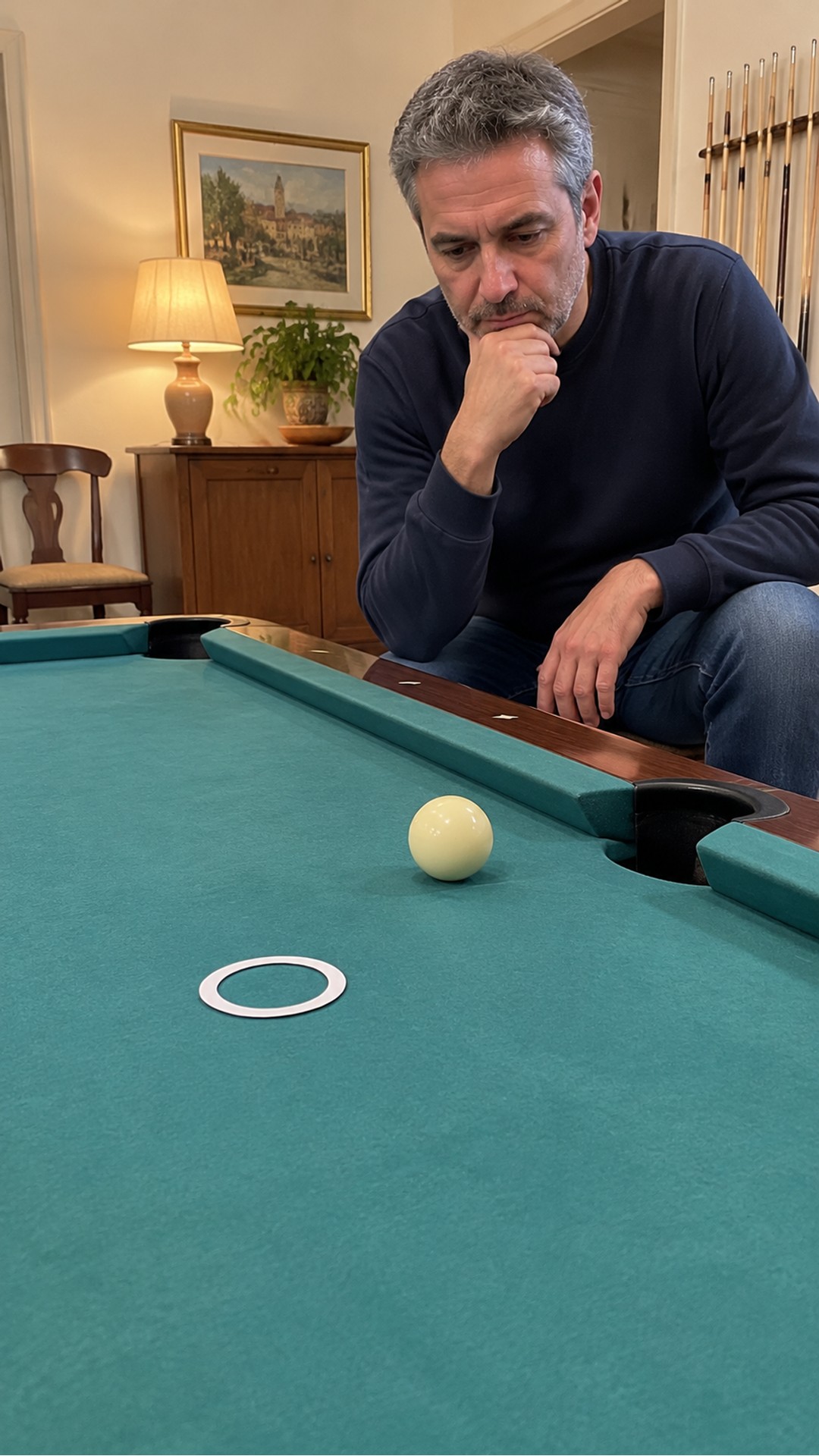
Creatività in preparazione Giocatore in pigiama al tavolo di casa con una tazza fumante in primo piano

Allenarsi a pool alle 8, con il caffè

Un piano di 4 settimane con sessioni di pool da 45 minuti

Originale Rail And Pocket R4 · 1118737210525188 Creatività originale Rail And Pocket, R4

It's Saturday morning, the coffee is still too hot to drink, and the house is quiet enough that you can hear the cue ball roll the full length of the table and kiss the rail.

You have never practiced at 8 AM before. Turns out it might be the best pool time of the week.

Here's why that's a surprise.

For most people, pool happens at night. After work, after dinner, after the game on TV. By then you're tired, a little distracted, and the session turns into a few racks of whatever.

Weekends are no better. The table becomes a place to set grocery bags. Friends come over and it's a party game. Fun, but not practice.

Meanwhile the table sits there. Slate, cloth, rails, light. Everything you need to get better, every single day.

You have probably noticed the pattern in other parts of your life.

The things you do on a schedule get done. The run that happens at 6 AM happens. The one you plan to fit in sometime doesn't.

Pool is the same. If practice only happens when the mood strikes, it mostly doesn't.

And here is the math that makes it worse. If you put in thirty minutes three times a week for a year, that's about seventy-eight hours. That's real time. The question isn't whether you have time to practice. It's whether the time you already spend adds up to anything.

The usual way people try to fix this is to look for drills.

You save videos you never watch again. You screenshot drill diagrams from social media that are cropped, blurry or missing the cue ball. You buy a book about the game that sits on the shelf next to the remote.

None of it fits the moment you actually have: thirty quiet minutes, a cup of coffee, and a table.

What fits that moment is a page. One page, one drill, set up and scored.

That's The Rail and Pocket Practice Book.

It's a printable practice book with 42 drills. Every drill gets its own page, with a top-view diagram of a 2 to 1 table, diamonds on the rails and all six pockets, and the balls drawn where they go. The book gives the positions in diamond coordinates, so it's quick to set up and easy to repeat.

Each page tells you what to do, how many times to do it, what a pass looks like, and where to write your score. There's an easier and a harder version of every drill.

The drills follow a clear path through six skill parts: stance, bridge and stroke; aim and pocketing; cue ball control; position and patterns; safeties and defense; and break and match habits.

There's a 4-week plan with 20 sessions of about 45 minutes each, five sessions a week. And there are session templates for 30, 45 and 60 minutes, so a short Saturday morning still has a beginning, a middle and an end.

The score sheets in the back include a drill score log, a session log, a weekly review and blank table diagrams for your own setups.

Here's what that Saturday morning looks like.

You printed the first week of the plan on Friday night and clipped it to the wall next to the cue rack. You set the coffee on a side table, not on the rail, because you have learned that lesson.

Session one of the plan. Ten minutes of stroke and bridge work. The cue ball goes up the long string and comes back toward your tip. You notice it drifts slightly left. Interesting.

Fifteen minutes of pocketing. The same cut shot from the same spot, ten times. You write 6 in the box.

Fifteen minutes of cue ball control. Stop shots to a paper ring on the cloth.

Five minutes for the session log.

You also try the easier version of the cut shot drill, just to see the difference. The ball sits a diamond closer to the pocket, and the page says to move to the harder version once you pass the mark twice in a row. That gives the next session a clear goal before you even finish this one.

Before you go upstairs, you flip to the table map at the front of the book. The diamond coordinates are explained, the spots are marked, and the notation legend shows how every diagram reads. Tomorrow you will set up the next drill in about a minute.

Total: forty-five minutes. The coffee is finally drinkable.

Here's the proof moment, and you can check it on your own table. Next Saturday, same drill, same spot, same box. Is it 6 again? 7? 5? Whatever it is, it's real, and it tells you what the following week should look like. The weekly review sheet walks you through exactly that.

Now the value.

The Rail and Pocket Practice Book is $37, one time. It's a PDF you download right away and print at home for your own practice, as many pages as you need.

You put real money into that table. This is the part that turns it from furniture into a practice room.

But the bigger change is quieter.

A planned half hour of pool on a slow morning is one of those small pleasures that makes a week feel like yours. No screen, no rush, just a clean stroke, a ball dropping in the pocket, and a number on a page that you earned.

The grocery bags can live on the counter. The friends can still come over on Saturday night for a party game, and the table will be ready for that too.

The table was always ready. Now so is the plan.

If you'd like to see the 42 drills, the 4-week plan and the printable score sheets, tap Learn More.

Pool practice at 8 AM, with coffee

A 4-week plan of 45 minute pool sessions

Más información